Dental Bonding for Uneven Teeth: A Quick Cosmetic Fix
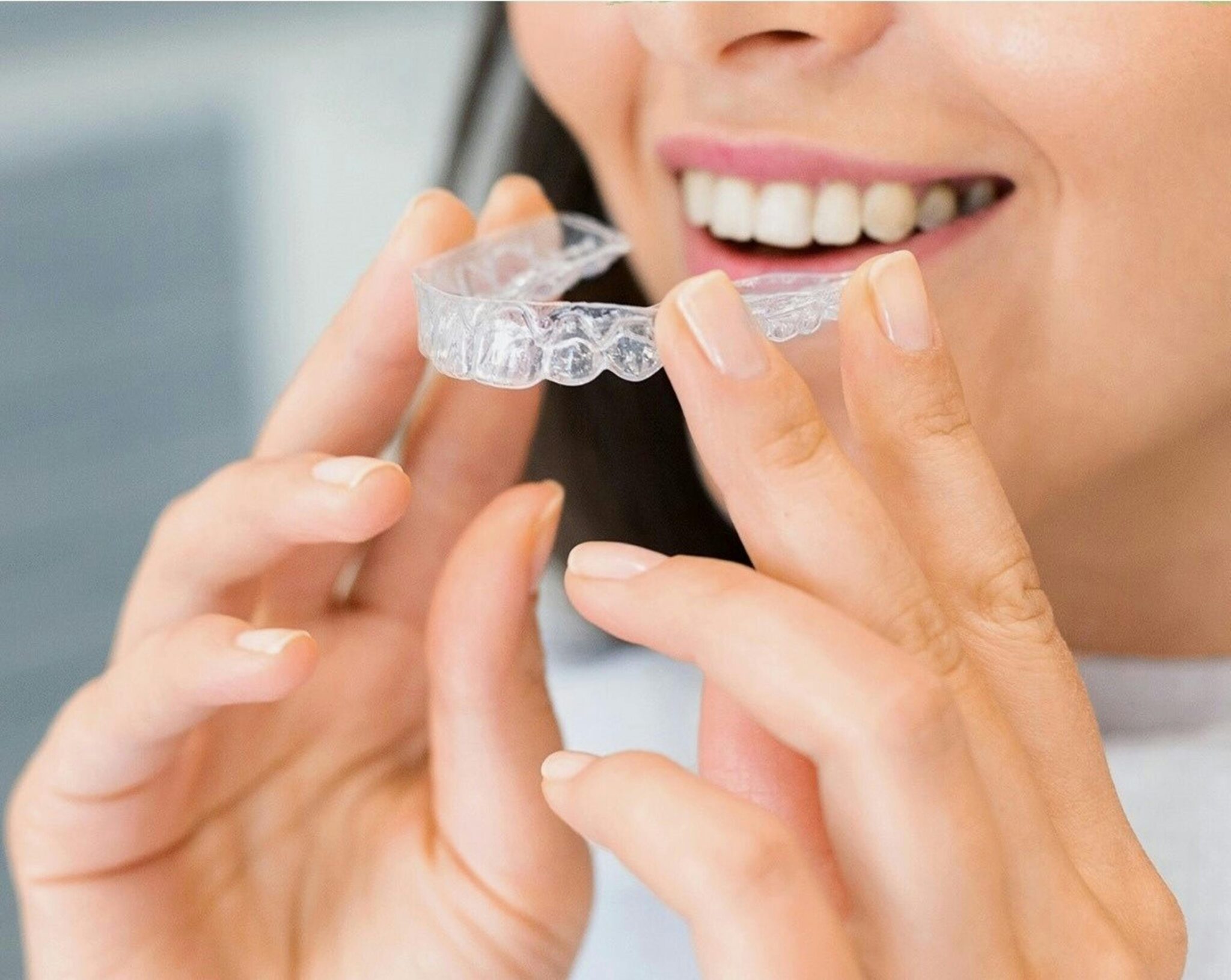
A slightly uneven smile bothers more people than most dentists hear about out loud. Patients rarely walk in saying, "My lateral incisor is 1.5 millimeters shorter than the one beside it." They usually say something simpler: one tooth looks off in photos, one edge catches the light differently, one corner makes the whole smile feel crooked. Small asymmetries can draw surprising attention because the eye notices imbalance even when the rest of the teeth are healthy.
For the right person, dental bonding can be one of the fastest and most conservative ways to smooth those differences. It is not a miracle treatment, and it is not the right answer for every case. But when uneven teeth are caused by minor shape issues, slight size discrepancies, worn edges, tiny chips, or subtle spacing, bonding often gives a very satisfying cosmetic improvement without drilling away much natural tooth structure.
What makes it appealing is not only speed. It is the combination of practicality, reversibility in many cases, and lower cost compared with veneers or crowns. That matters for patients who want to improve their smile but are not ready for a major commitment, financially or biologically.
What dental bonding actually does
Dental bonding uses a tooth-colored composite resin, the same family of material commonly used for white fillings, to reshape part of a tooth. The dentist adds resin in careful layers, hardens it with a curing light, then trims and polishes it so the final shape blends with the surrounding enamel.
When the concern is uneven teeth, bonding is less about "covering" teeth and more about refining contours. A dentist might lengthen one front tooth by a millimeter, soften a sharp corner, build out a narrow tooth so it matches its neighbor, or close a small gap that exaggerates the appearance of asymmetry. In some cases, the change is so modest that another person cannot tell exactly what was done. They simply notice the smile looks more balanced.
That subtlety is one of bonding's strengths. Good cosmetic dentistry is often invisible when it is done well.
Why uneven teeth happen in the first place
Uneven teeth do not always mean something is wrong. Many smiles have natural variation. One central incisor may be slightly longer than the other. Canines can sit a touch higher. Lateral incisors are often smaller by design. Some patients inherit these traits, and others develop them over time.
Wear is a common culprit. A person who grinds at night may flatten one incisal edge faster than another, especially if the bite is not perfectly even. Small chips can do the same thing. I have seen patients convinced that a tooth "shifted" when, in reality, the tooth next to it had simply worn down over several years.
There are also developmental differences. A peg lateral, for example, is a smaller-than-average lateral incisor that can make the smile line look irregular. Previous dental work can contribute too. An old filling on one front tooth may stain, dull, or lose contour, making that tooth look shorter or wider than the rest.
Not every uneven smile should be treated with bonding. If the asymmetry is caused by deeper bite problems, tooth movement, gum level differences, or significant crowding, bonding may only mask the symptom rather than solve the cause.
When bonding is a strong option
Dental bonding works best in cases where the problem is modest and mostly cosmetic. Think of it as a surface-level design solution rather than an orthodontic correction or structural rebuild.
It tends to be especially useful when teeth are healthy overall and need just enough reshaping to create harmony. A common example is a patient whose two front teeth are nearly identical except for one slightly chipped edge. Another is someone with one lateral incisor that looks undersized, creating a visual dip in the smile. Bonding can also help after orthodontic treatment, when the teeth are straight but their shapes are still mismatched.
The treatment shines in situations where preserving enamel matters. Veneers can produce beautiful results, but they usually involve some enamel alteration. Bonding often requires little to none. For younger adults, or for anyone cautious about committing to more permanent restorative work, that can be a decisive advantage.
What the appointment feels like
The phrase "quick cosmetic fix" is not exaggerated for many bonding cases. A straightforward front tooth bonding appointment may take anywhere from 30 minutes to a couple of hours, depending on how many teeth are being refined and how detailed the reshaping needs to be.
Most patients do not need anesthesia unless the dentist is repairing decay, replacing a filling, or making changes near a sensitive area. That surprises people. They expect something cosmetic to feel more involved than it is.
The process is meticulous even when it is fast. The dentist usually starts by examining the bite, smile line, and tooth proportions from several angles. Photos are often helpful. In cosmetic cases, communication matters as much as technique. If a patient says, "This tooth looks too square," that is useful, but not specific enough. A better conversation gets into shape, length, brightness, and what exactly feels unbalanced.
Once the plan is clear, the tooth surface is cleaned and lightly prepared. A conditioning liquid helps the resin adhere. Then the dentist applies composite in increments, building shape the way a sculptor adds clay. The difference between acceptable bonding and excellent bonding often comes down to contour and polish. Flat bonding catches light differently and can look obvious. Well-finished bonding reflects light like enamel and disappears into the smile.
At the end, the bite is checked carefully. This is not a trivial detail. If new bonding on a front tooth takes too much pressure when the patient bites or slides side to side, it is more likely to chip.
The appeal of same-day improvement
There is a special kind of relief that comes with seeing a cosmetic concern corrected immediately. Orthodontics can take months or years. Veneers usually involve at least two visits. Bonding often delivers a visible result the same day, and that changes the emotional experience for patients.
I have seen patients spend years smiling with closed lips because of a tiny irregularity that others barely noticed. Once that single edge is corrected, their whole expression changes. The treatment itself may be small, but the social effect is not. Photos feel easier. Speaking feels less self-conscious. Some people stop obsessively checking their smile in mirrors or on video calls.
That said, same-day dentistry can tempt patients into making fast decisions. A cosmetic fix should still be planned thoughtfully. Quick does not mean casual.
Where bonding works beautifully, and where it falls short
Bonding is at its best when the dentist is enhancing shape within the existing framework of a healthy smile. It is less successful when it is asked to compensate for problems better treated another way.
A few examples make this clearer:
- A tiny chip on a front tooth is often an ideal bonding case.
- One tooth that is naturally narrower or shorter than its mirror image can often be balanced very effectively with bonding.
- Mild triangular spaces between teeth after orthodontics can sometimes be softened with composite.
- Slight edge wear from grinding may be rebuilt, provided the bite is also managed.
- A severely rotated tooth usually needs orthodontic movement, not cosmetic camouflage alone.
When bonding is used outside its comfort zone, the results can look bulky, stain faster, or break more often. A front tooth that really needs to be moved orthodontically may end up looking too wide if resin is added just to create the illusion of alignment. That is one of the most common judgment calls in cosmetic dentistry: knowing when a conservative fix is elegant, and when it is simply insufficient.
How natural can it look?
Very natural, if the operator understands color, translucency, texture, and anatomy.
This is where patients should be selective. Composite resin is a versatile material, but it is not self-correcting. Two dentists can use the same brand of resin on the same tooth and produce dramatically different results. Front teeth are especially unforgiving because they sit in direct view and reflect light constantly.
Shade matching is more complex than choosing "white." Natural enamel is rarely a flat, uniform color. It may have translucency at the edges, warmer tones near the gumline, and subtle surface texture that breaks up reflection. A polished but textureless front tooth can look unnaturally smooth, even if the shade is close.
The best bonding often goes unnoticed. Patients sometimes assume a natural result means a simple procedure. Usually it means the opposite. It means the dentist paid attention to millimeters, line angles, and surface Dental Bonding finish.
Durability and the real-life maintenance question
Bonding is durable, but it is not as strong or as stain-resistant as porcelain. That trade-off should be discussed honestly before treatment.
In everyday practice, small anterior bonding can last several years and sometimes much longer, especially when the bite is favorable and the patient takes care of it. But bonding is more prone to chipping, edge wear, and staining than ceramic veneers. Coffee, tea, red wine, tobacco, and strongly pigmented foods can affect the surface over time. The resin does not always stain uniformly either, so minor discoloration can show up in spots or along margins.
Patients who clench or grind are a special group. Bonding can still work for them, but they need to understand the risk profile. A night guard is often part of the long-term plan. Without one, the same habits that created the unevenness in the first place may damage the repair.
Touch-ups are common and not necessarily a sign that the treatment failed. One advantage of bonding is that it is repairable. A chipped composite edge can often be refreshed or patched more easily than porcelain.
Cost, value, and why "cheaper" is not the whole story
Bonding is usually less expensive than veneers or crowns, which is one reason it is frequently described as accessible cosmetic dentistry. That is true, but price alone can distort expectations.
A lower fee does not mean the work requires less artistic skill. In fact, direct bonding on front teeth can be one of the more technique-sensitive procedures in a cosmetic practice because everything is shaped by hand, chairside, in real time. There is no ceramic lab technician refining anatomy after the patient leaves.
Value comes from matching the treatment to the problem. If a patient needs only slight contour correction, bonding may offer the best return by solving the issue conservatively and efficiently. If someone wants a comprehensive change in color, shape, and alignment across many visible teeth, veneers or orthodontics may prove more predictable over time.
The most expensive mistake is not choosing the higher-priced option. It is choosing the wrong option and redoing it later.
Bonding versus veneers for uneven teeth
Patients often compare these two because both can improve the appearance of front teeth. The difference lies in scope, longevity, and invasiveness.
Bonding is usually better suited to small to moderate refinements. It is faster, more conservative, and easier to repair. Veneers are stronger, more stain-resistant, and often better for larger cosmetic redesigns. They also tend to hold polish and color more consistently over the years.
A patient with one slightly short front tooth may be an excellent bonding candidate and a poor veneer candidate. A patient with multiple worn, discolored, mismatched front teeth may get a more stable long-term result from veneers. Neither approach is universally better. The right choice depends on how much change is needed and how much healthy tooth structure should be preserved.
The importance of bite, not just appearance
A common mistake in cosmetic dentistry is treating the smile in a static photo instead of in motion. Teeth do not just sit there looking pretty. They bite, glide, contact, flex, and absorb force every day.
Before bonding uneven front teeth, a careful dentist evaluates how the upper and lower teeth meet. If one edge takes repeated impact every time the patient talks, chews, or grinds, that area becomes a weak point. This is why some bonding lasts beautifully while other cases chip within months.
Sometimes the answer is as simple as adjusting a contact point or making a night guard. Sometimes the bite reveals that the cosmetic problem is really part of a bigger functional issue. Patients do not always love hearing that their "small fix" needs a wider assessment, but that honesty protects them.
Who should think twice before getting bonding
Not every patient is an ideal candidate, even when the cosmetic concern seems small.
People with untreated gum disease, active decay, or poor oral hygiene should stabilize those issues first. Composite placed in an unhealthy environment is harder to maintain and less likely to look good for long. Patients with very heavy grinding habits need a realistic discussion about wear and breakage. Those seeking perfection beyond what natural teeth can reasonably provide may also be disappointed, especially with conservative reshaping.
There is another group worth mentioning: people whose unevenness is mostly due to tooth position rather than tooth shape. If one tooth is set far behind another or rotated significantly, bonding can only disguise so much. The result may become too thick or too broad. In these cases, short-term orthodontics can sometimes create a better foundation before any cosmetic finishing is done.
Questions worth asking before you commit
A good cosmetic consultation is not a sales pitch. It should help the patient understand what is possible, what is limited, and what maintenance will look like.
Here are a few useful questions to bring to an appointment:
- How much of my unevenness is shape, and how much is tooth position or bite?
- Will bonding look natural on my teeth specifically, given my color and enamel texture?
- How long is this result likely to last in my case?
- If it chips or stains, can it be repaired easily?
- Is there a more appropriate option than bonding for what I want?
The answers matter more than glossy before-and-after photos. Cosmetic success depends on whether the treatment fits your mouth, not whether it looked good in someone else's case.
Aftercare is simple, but not optional
Most bonded teeth do not require complicated care. They require consistent care. Brushing twice daily, flossing, regular professional cleanings, and avoiding habits like biting pens, opening packages with teeth, or chewing hard ice all make a difference.
The first couple of days after bonding, I often advise patients to be especially mindful with dark staining foods and drinks if the restoration has been freshly polished. Long term, think less in terms of "forbidden" items and more in terms of pattern. A few cups of coffee each week are different from constant all-day sipping. One glass of red wine is different from nightly exposure without good cleaning habits.
If you clench, use the night guard if one is prescribed. This may be the single best predictor of whether front edge bonding stays intact.
What patients often notice afterward
The change most people comment on is balance. They do not necessarily say the teeth look whiter or larger. They say the smile looks "even," "cleaner," or "more finished." That is the hallmark of well-planned bonding. It respects the existing smile instead of overpowering it.
Some also notice speech feels slightly different for a day or two if the edges of front teeth were lengthened, especially with sounds like "f" and "v." This usually settles quickly as the tongue and lips adapt. Mild initial awareness is normal. A bonded tooth should not feel bulky or awkward once adjustment happens. If it does, it may need refining.
The bottom line on dental bonding for uneven teeth
For the right case, dental bonding is one of the most practical cosmetic tools in dentistry. It can correct minor unevenness quickly, preserve healthy enamel, and create a more symmetrical smile in a single visit. Its strengths are precision, conservatism, and flexibility. Its limitations are equally real: it can stain, chip, and fall short when the underlying problem is alignment or bite rather than shape alone.
That is why the best bonding cases start with restraint. A thoughtful dentist does not add resin simply because it is possible. They decide whether it is the most intelligent way to improve the smile. When that judgment is sound, even a tiny adjustment can make a noticeable difference, and often for less time, cost, and tooth alteration than patients expect.
If one uneven edge or one mismatched front tooth has been bothering you, it is worth asking whether bonding could help. Sometimes the fix really is that simple. The key is making sure simple is also the right choice.
Toothworks of Bakersfield, Dentist and Orthodontist
Address: 1030 H St #1, Bakersfield, CA 93304
Phone number: +16613239421
FAQ About Dental Bonding
How long does dental bonding last?
Dental bonding typically lasts between 3 and 10 years (averaging about 5 to 8 years) before it needs a touch-up or replacement. Its lifespan depends heavily on your daily habits, where the bonding is placed in your mouth, and how well you care for your teeth.
How expensive is bonding a tooth?
Dental bonding typically costs between $100 and $600 per tooth, with a national average of about $431 per tooth.
What are the downsides of dental bonding?
Dental bonding has several drawbacks, including lower durability, a shorter lifespan, and a tendency to stain compared to alternatives like porcelain veneers.